
The Often-Overlooked Gifts of ADHD in Women - It’s Time We Celebrate Them.
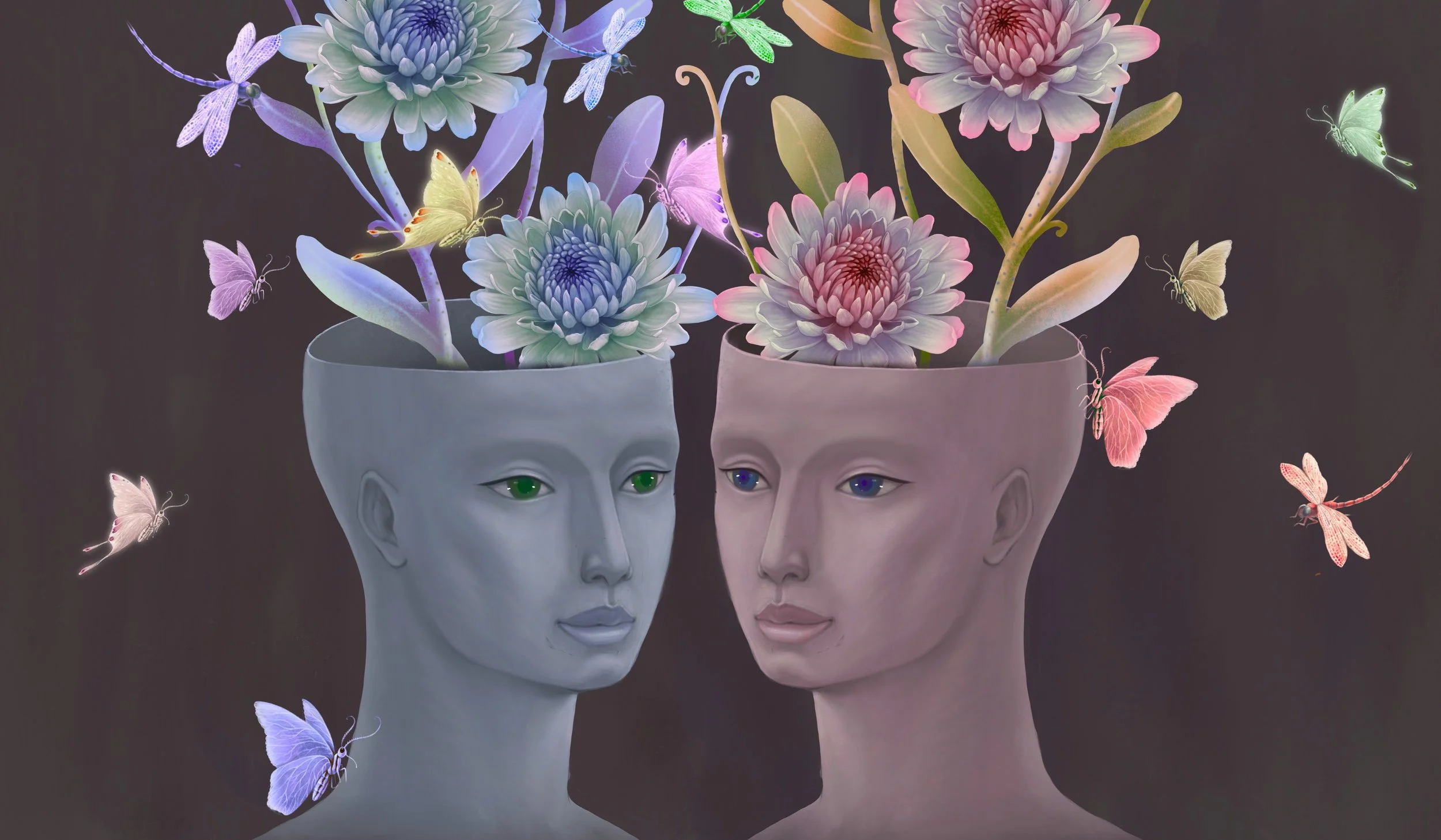
Therapists aren’t really supposed to play favorites, but I’ll be honest - I adore working with women with ADHD. They are amongst some of the most interesting, creative and thoughtful clients I have and yet, ADHD gets SUCH a bad rap in our culture. The mere labeling of “disorder” is problematic and arguably inaccurate.
As if our brains are the problem and not the cultural expectations and norms ….
When we talk about ADHD, the conversation tends to focus on what’s difficult.
Trouble with focus. Procrastination. Time blindness. Forgetfulness. Emotional overwhelm. A desk covered in papers that were absolutely going to be dealt with yesterday.
These challenges are absolutely real. For many women with ADHD, they can affect work, relationships, finances, self-esteem, and, well, life-ing.
But ADHD is a particular way of being in the world, and the same brain that creates challenges can also bring some pretty remarkable qualities - especially when placed in optimal environments.
This matters especially for women who are diagnosed with ADHD later in life. Many have spent decades interpreting their differences as personal shortcomings.
Understanding the strengths associated with ADHD can be part of developing a more complete and compassionate picture of yourself.
Here are some of the gifts I often see in women with ADHD.
1. Creativity and Original Thinking
ADHD brains tend to make connections quickly and broadly. One thought leads to another, which leads to another, and suddenly you’ve traveled somewhere completely unexpected.
Yes, this can make it difficult to stay focused during a meeting.
It can also be the foundation of extraordinary creativity. Many people with ADHD are skilled at seeing possibilities other people overlook.
This kind of thinking can show up in art, writing, entrepreneurship, problem-solving or simply approaching everyday situations differently.
2. Deep Curiosity
Many adults with ADHD are intensely curious.
They may become fascinated by a subject and want to know everything about it.
Interest plays an important role in ADHD attention. When something is stimulating or meaningful, concentration can become remarkably strong.
This curiosity can make people with ADHD lifelong learners. They may move between disciplines, develop unusual combinations of knowledge, or become deeply knowledgeable about subjects that matter to them.
Curious people are interesting people.
3. Hyperfocus
ADHD is often described simply as an inability to focus, but the reality is more complicated.
Many people with ADHD experience periods of hyperfocus, particularly when something feels interesting, urgent, challenging, or personally meaningful. This may also be considered flow state. And MANY successful people spend their lives seeking out this state of being including athletes and artists.
During hyperfocus, someone may become deeply absorbed in whatever it is they’re doing - craft or work project. Hours can pass unnoticed.
Hyperfocus can certainly create problems. Eating lunch and going to bed still matter. But when understood and harnessed intentionally, this capacity for going all in can be incredibly productive and satisfying.
The goal is often learning what reliably captures your attention and creating a life with enough room for those interests.
4. Sensitivity and Emotional Depth
Emotional sensitivity can be one of the harder parts of ADHD. Not because sensitivity is a flaw, of course it’s not. But because sensitivity in ADHD can quickly dip into reactivity without awareness and skills. This experience of ADHD is called Rejection Sensitivity Dysphoria (RSD) and particularly common amongst women.
But sensitivity has another side.
People who experience their own emotions deeply may also be highly attuned to other people. They may notice subtle shifts in mood, recognize when someone feels excluded, or intuitively understand emotional complexity.
That sensitivity can contribute to empathy, relational awareness and artistic expression. Interestingly, folks with ADHD also tend to have strong sense of justice. Women with ADHD may have been labeled difficult, argumentative or oppositional as kids for just that reason.
Having someone, like a therapist or even a support group, who can fully see you and normalize your experience can help folks feel more regulated as they navigate the world. As well, learning tools for emotional regulation does not require becoming less sensitive. It can mean developing enough capacity to work with that sensitivity rather than being constantly overwhelmed by it.
5. The Ability to See the Big Picture
Details and repetitive tasks can be challenging for many ADHD brains. They’re often low reward tasks, and well, boring. If there’s one thing an ADHD brain craves is interest. That’s why big-picture thinking can be an entirely different story.
Some people with ADHD are excellent at spotting patterns and seeing how seemingly unrelated pieces fit together. They may intuitively understand the larger direction of a project while struggling to complete the spreadsheet associated with it.
6. Adaptability and Improvisation
Many women with ADHD can think remarkably quickly when plans change.
They may struggle with rigid systems while thriving in environments that require flexibility, spontaneity, and creative problem-solving. When something unexpected happens, they can often generate Plan B, C, and D before everyone else has finished processing Plan A.
There is a kind of resourcefulness that develops when your brain rarely follows a perfectly straight line.
7. Passion and Enthusiasm
When someone with ADHD cares about something, you can often feel it.
There can be tremendous energy behind an idea, relationship, creative project, cause, or new interest. That enthusiasm can be contagious.
For women in particular, this quality is sometimes dampened over time. Years of being told they are “too much,” can lead to self-monitoring and shrinking.
Part of accepting an ADHD brain may involve reclaiming some of that aliveness.
Your enthusiasm does not need to be embarrassing.
ADHD Strengths in Midlife
For women diagnosed with ADHD in midlife, recognizing these strengths can be particularly powerful.
A late ADHD diagnosis often arrives after years of trying to function according to expectations that never quite fit. Many women become extraordinarily skilled at masking, overpreparing, people-pleasing, or pushing themselves harder to compensate.
Then midlife arrives.
Hormonal changes during perimenopause may make familiar ADHD coping strategies less effective. At the same time, many women begin questioning roles, expectations, and identities they have carried for decades.
This can create an opportunity to understand your brain differently.
What environments actually help you function? What kinds of work hold your attention? Where does your creativity come alive? What structures support you without suffocating you? Which parts of yourself have you been trying to suppress because they were inconvenient to other people?
These are useful questions at any age. In midlife, they can become especially important.
Creating a Life That Works With Your ADHD Brain
Recognizing the gifts of ADHD does not mean we’re ignoring the challenges. Both can exist.
ADHD may have created genuine difficulties. It may also be connected to your creativity, curiosity, sensitivity, humor, intuition, passion, and ability to see possibilities other people miss.
For many women diagnosed later in life, that recognition can be deeply relieving.
You get to learn how your brain works now and create a life that supports your unique being.
Closing Thoughts – Therapy for Midlife Women with ADHD in Oakland, California
If you are in Oakland or anywhere in California, you may be looking for support that goes beyond symptom management and looks at the whole picture.
My practice focuses on helping women navigate, not only late-diagnosed ADHD, but all the things that go with it …
Perimenopause and emotional changes
Body image and sexuality
Existential and spiritual exploration
This work integrates feminist psychology, somatic approaches, narrative therapy, and psychospiritual practices to support meaningful and sustainable change.
👉 Learn more about working with me
👉 Book an initial consultation (for women in California)
👉 Download my free journal prompts for Midlife Inquiry
Until next time, wishing you health & ease,
Jessika

About Jessika Fruchter LMFT – Specialized Therapy for Midlife Women in Oakland
Jessika Fruchter, LMFT, (Lic. 97617) is based in Oakland, California. She offers specialized mental health care for women navigating perimenopause and all things midlife. She offers individual and group therapy support to women throughout the state of California. She also writes frequently about issues of midlife, spirituality, and mental health on her blog: Minding Midlife and Substack: We Were Made For This.