
Therapy for Women Navigating Perimenopause
Based in Oakland | Serving clients virtually across California
Perimenopause therapy may be right for you if ….
If you’ve found your way to this page your world may feel upside down and out of control. Maybe it started with anxiety that came out of nowhere or unexplained sadness.
You can't seem to sleep, no matter how exhausted you are. And you're snapping at people you love, crying over things that never used to bother you. You’re forgetting simple words, or wondering why you suddenly feel so... unlike yourself.
On top of all that, your body is changing. Maybe you've gained weight despite doing all the "right" things. Your skin feels different. Your joints ache. Your libido has changed, and for the first time, sex feels uncomfortable, or maybe even painful.
And life hasn't slowed down to make room for any of it.
You're still showing up at work. Still caring for kiddos, partners, aging parents, friends, and everyone else who depends on you. You're trying to keep all the plates spinning while feeling like your mind and body are working against you.
No wonder you're exhausted.
When Your Body No Longer Feels Like Home - Therapy in Oakland & Throughout California

Am I in Perimenopause? - You’re asking Chat GPT at 3am.
And why wouldn’t you? No one prepared us for this.
Instead, you're piecing together information from podcasts, social media, books, Reddit, friends, and late-night internet searches, trying to figure out whether you need hormone therapy, supplements, lifestyle changes, therapy or all of the above.
Every expert seems to recommend something different. Don’t forget the 30 grams of fiber at breakfast and to “lift heavy.” Don’t do cardio, though. That’s no longer a solid choice.
One clinician tells you you're too young for perimenopause.
Another recommends hormone therapy.
Someone else tells you it's just stress, anxiety, or getting older.
It's exhausting trying to become the expert in your own healthcare overnight.
To make matters worse, many healthcare providers receive very little formal education about perimenopause and menopause. Too many women leave appointments feeling dismissed, unheard, or questioning whether what they're experiencing is even real.
But here's what I want you to know: You're not imagining this.
Perimenopause is a profound biological transition that can affect your mood, sleep, memory, concentration, anxiety, relationships, sexuality, and overall sense of well-being. It's not "just hormones," but hormones absolutely matter.
And while medical care, hormone therapy, nutrition, movement, and lifestyle changes can all play important roles, many women also need space to process what it means to move through this chapter of life.
For generations, menopause has been treated as something women were expected to endure quietly or even fear. Yet in many parts of the world, it has traditionally been viewed as a rite of passage into a new stage of life. While that perspective doesn't erase the challenges of perimenopause, it offers a different lens: this isn't simply an ending. It's a transition that deserves support, understanding, and care.

Women Deserve Specialized Therapy for Perimenopause - Oakland & throughout California
Perimenopause isn't simply a hormonal transition.
It's also a healthcare transition, a relationship transition, and often one of the busiest seasons of adult life.
Together, we'll explore what's happening without reducing everything to hormones or ignoring the role hormones play.
We'll make sense of the anxiety, grief, body changes, work stress, relationship challenges, and uncertainty that often accompany this stage of life. We'll develop practical strategies for managing overwhelm while helping you feel more confident navigating medical decisions and advocating for your own care.
My approach integrates feminist therapy, narrative therapy, somatic practices, mindfulness, and expressive arts therapy. I also believe the best care is collaborative. When appropriate, I'll encourage you to build a trusted healthcare team, including menopause-informed medical providers, so you don't have to figure everything out alone.
Most importantly, therapy offers a place where you don't have to convince someone that this transition is hard. You deserve support that takes both your physical symptoms and your emotional experience seriously.
What Becomes Possible with Perimenopause Support
As therapy progresses, many women begin to...
Feel calmer and more emotionally grounded.
Better understand what's happening in both their body and mind.
Develop confidence in making informed decisions about their healthcare.
Move through grief with greater self-compassion.
Feel less alone and less afraid of the future.
Rebuild trust in their changing body.
Rediscover parts of themselves that had been buried beneath years of caregiving, achievement, or simply surviving.
Begin viewing midlife not as the beginning of decline, but as the beginning of a more authentic, intentional chapter.
Perimenopause can be one of the most disorienting transitions a woman experiences. It can also become an invitation to live more honestly, more intentionally, and more fully than ever before.
If you're ready to better understand what's happening and reconnect with yourself along the way, I'd be honored to walk beside you.
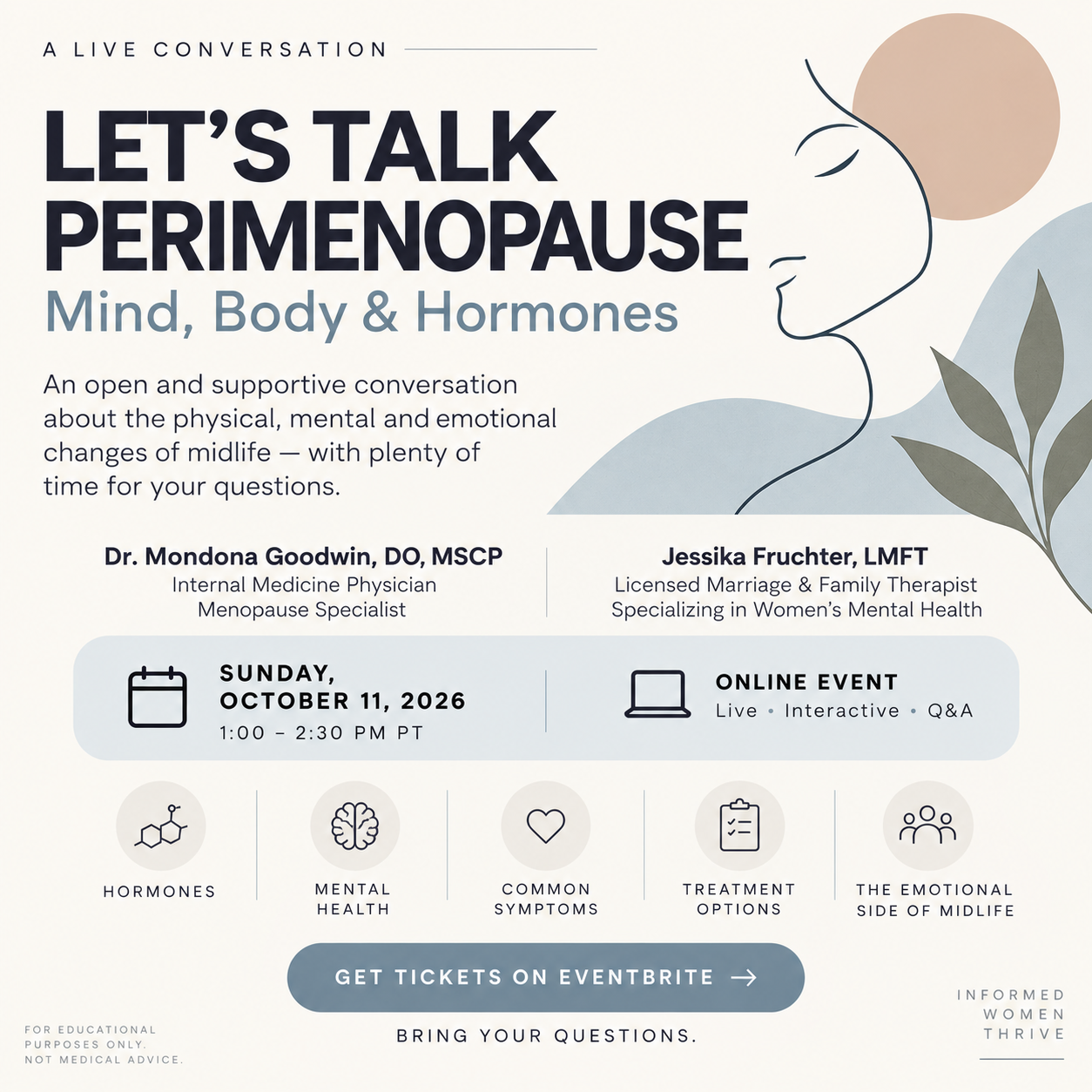
Join us October 11 - Perimenopause Educational Workshop w/ Jessika Fruchter LMFT & Dr. Mondona Goodwin, MD.
FAQ - Jessika Fruchter, LMFT, Therapy for Women Navigating Perimenopause in Oakland and throughout California
Is therapy helpful if my symptoms are primarily hormonal?
1
Yes. Therapy doesn't replace medical treatment, but it can help you navigate the anxiety, grief, identity shifts, relationship changes, and emotional challenges that often accompany hormonal changes. Many women find that the best outcomes come from combining medical care with psychological support.
Why does perimenopause feel so emotionally intense?
2
Hormonal changes can affect mood, sleep, memory, and anxiety. At the same time, many women are navigating major life transitions involving family, career, aging parents, relationships, and identity. It's often the combination of biological and life changes that makes this season feel so overwhelming.
Do I have to wait until I'm sure it's perimenopause?
3
No. Many women begin therapy before they've received a diagnosis or even realize hormones may be playing a role. If something feels different and you're struggling, you don't have to wait for certainty before reaching out for support.
Do you help clients figure out hormone therapy or supplements?
4
While I don't prescribe medications or recommend specific supplements, I can help you sort through the emotional overwhelm that often comes with making healthcare decisions. If appropriate, I may encourage you to consult with a menopause-informed medical provider so you have accurate information and a collaborative team supporting you. I do support clients with recommendations for lifestyle modifications such as nutrition and movement if they are interested.
My Practice at a Glance - Jessika Fruchter, LMFT
I'm a California Licensed Marriage and Family Therapist specializing in therapy for women navigating perimenopause, menopause, and midlife. I help women manage anxiety, identity changes, burnout, body image concerns, relationship challenges, and the emotional impact of hormonal transition.
I offer secure online therapy throughout California using a holistic, evidence-informed approach that integrates feminist therapy, mindfulness, somatic practices, expressive arts, and narrative therapy. Therapy works alongside your medical care to help you navigate this stage of life with greater clarity and confidence.