
Why Am I So Angry in Perimenopause?
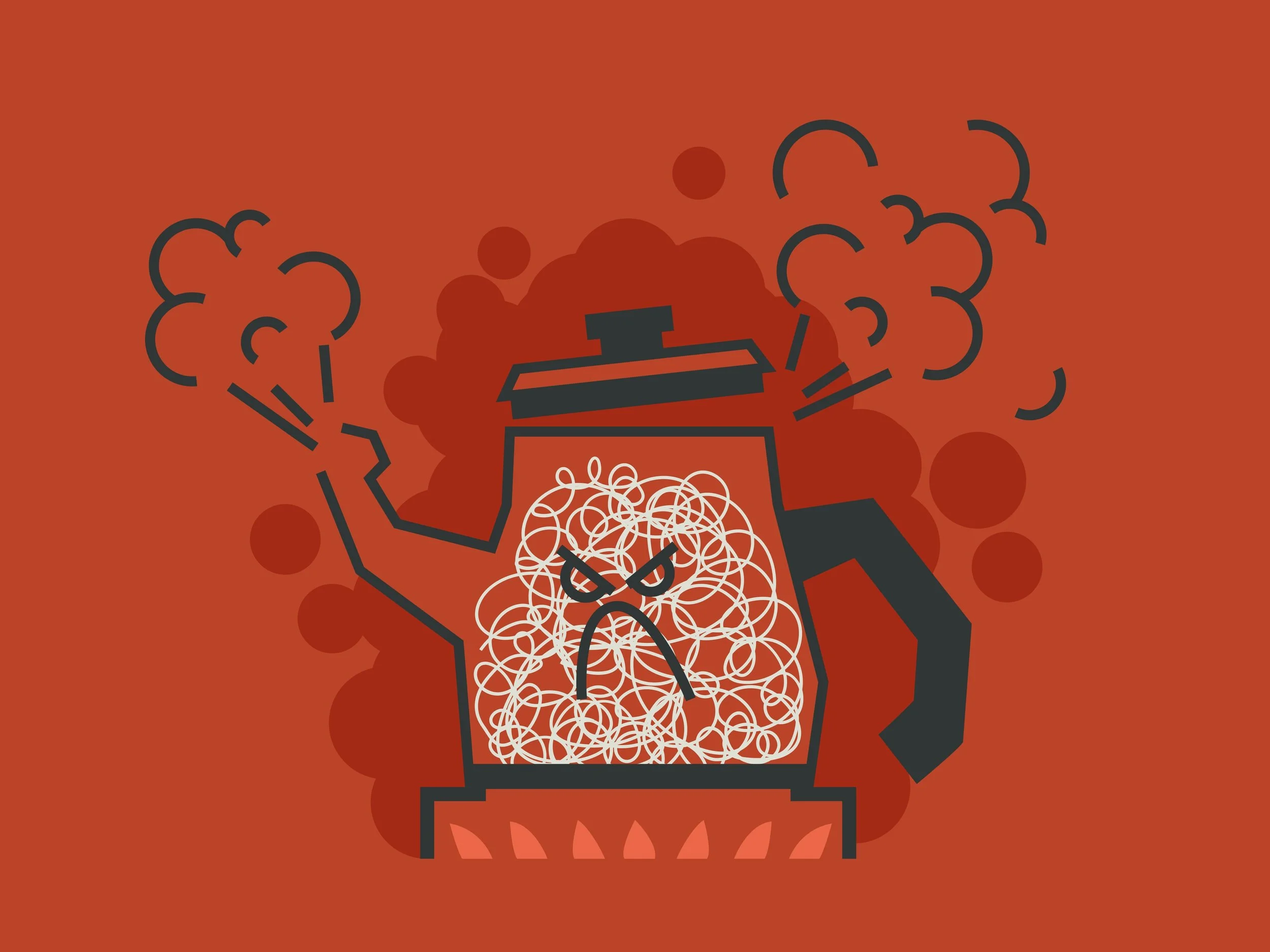
Where to begin with this one? The anger and irritability are real. Some women even call it rage.
Things that once rolled off your back now make you furious. You're snapping at your partner, feeling irritated with coworkers, and can’t quite pin point why.
You might be wondering: What’s going on here? I don’t feel like myself.
If you're in your in midlife, perimenopause may be playing a role. But there's often more to the story than just the hormonal fluctuations at hand. In this post, let’s talk about the anger and irritability that commonly surface in perimenopause and how to work with it.
First, Why Does Perimenopause Cause Anger?
During perimenopause, hormone levels fluctuate wildly. This causes a whole host of symptoms – physically, emotionally and spiritually. These hormonal shifts can affect neurotransmitters involved in mood regulation, including serotonin. Sleep disturbances, anxiety, and changes in stress tolerance can also make irritability more intense.
For some women, anger seems to appear out of nowhere. Others notice that familiar frustrations suddenly feel impossible to ignore.
Hormonal changes can intensify our emotional responses. They can also bring our attention to longstanding issues that we’ve been pushing aside due to obligation or sense of responsibility.
I’ve heard estrogen referred to as the “accommodation” hormone. I think that description is dead on.

What Is Your Anger Trying to Tell You?
As a feminist therapist, I'm particularly interested in what happens when women begin questioning the expectations they've lived with for decades.
In general, our culture doesn’t support women feeling anger though it is important messenger. Anger tells us when our boundaries have been crossed, when we’re overtaxed, when something is unjust.
Many of us have been socialized to be accommodating, agreeable, and emotionally available. We've learned to prioritize other people's needs and keep the peace.
By midlife, those patterns may no longer feel sustainable and many women are over it.
And while anger can certainly feel uncomfortable – especially if you’re not used to it - it can also be a powerful source of information and motivation.
How Therapy Can Help You Work With Anger – Therapy for Women in Oakland, California
One of the most important approaches to working with anger is containment, not unlike managing fire. Therapy can provide that containment by creating a supportive space to explore the sparks without pressure to make them disappear.
Together, we can begin identifying the experiences, unmet needs, and longstanding patterns that may be fueling your frustration.
Through somatic and expressive approaches, we can work with the energy of anger and explore how to channel it toward meaningful change.
This might involve setting firmer boundaries, speaking your truth, or making decisions that better reflect who you are becoming.
Ritual can also be containing and I’ll include one of my favorites here.
The F* It Ritual – For Processing Anger & Irritability
One of my favorite practices for releasing accumulated frustration is something I call the F It Ritual*.
Think of it as a weekly practice of energetic hygiene. Just as we regularly tend to our physical environment, we can create intentional space to clear out the emotional clutter we've accumulated. Important note: Don’t wait until you’re feeling angry. Often things have started building before we finally get to the point of being uncomfortable. Take this time to ask yourself what bothered me this week?
Here's how it works:
Set aside time each week. Find a quiet moment when you can be alone with your thoughts.
Write your F It list.* Make a list of everything that's frustrating, irritating, or weighing on you. Big things, little things, and everything in between. Don't censor yourself.
Burn the list. When you're finished, safely burn the paper in a fire-safe container in an appropriate outdoor location. Follow local fire restrictions. You can also tear it up if burning isn't safe or practical.
Notice what shifts. Take a moment to observe how you feel. You might experience relief, clarity, or a renewed sense of spaciousness.
The ritual offers a symbolic way to release the emotional charge you've been carrying. You can also notice which frustrations keep returning. Those may be asking for deeper attention or meaningful action.
Anger Can Be Part of Your Midlife Transformation
Perimenopause is a biological transition, yes. But it's also a time when many women begin reevaluating their identities, relationships, and priorities.
Anger may be one part of that process.
With curiosity, support, and intentional action, it can become a catalyst for greater self-awareness and personal agency.
You deserve to listen to what your anger has to say. And you get to decide what happens next.
I hope this practice is helpful to you.
Until next time, wishing you health and ease,
Jessika
Please note: All ideas, thoughts, musings and psychological and spiritual insights expressed in this piece are written by me, Jessika Fruchter, LMFT. A machine did not write this, promise, though may have been used for proofreading.
About Jessika Fruchter LMFT – Specialized Therapy for Midlife Women in Oakland
Jessika Fruchter, LMFT, (Lic. 97617) is based in Oakland, California. She offers specialized mental health care for women navigating perimenopause and all things midlife. She offers individual and group therapy support to women throughout the state of California. This work integrates feminist psychology, somatic approaches, narrative therapy, and psychospiritual practices to support meaningful and sustainable change.
👉 Learn more about working with me
👉 Book an initial consultation (for women in California)
👉 Download my free journal prompts for Midlife Inquiry
She also writes frequently about issues of midlife, spirituality, and mental health on her blog: Minding Midlife and Substack: We Were Made For This.