
Top 6 Questions I Get Asked About Spiritually-Integrated Therapy
Yes, I’m a Spiritual Therapist in California.
As a therapist who specializes in working with midlife women, I hear time and time again questions of spirituality and belief systems parallel questions about identity, purpose and creating a meaningful life.
That’s not by accident. At this stage in life, at this period in history, women are seeking more depth in the way they understand themselves and their place in the world. Spiritually-integrated therapy is a way to explore that level of seeking.
Who are the Seekers?
For some women, spirituality has always been an important part of their lives, though it may have looked different for each. Some of my clients have dabbled in tarot, astrology or human design. Some identify as witches from multi-cultural traditions or feel drawn to doing so. Others attend temple, mosque or church, and others simply feel a greater connection to the world around them – both seen and unseen. They want a therapist that gets it.
Meanwhile, other clients find midlife brings a deep desire for a more soulful life and new curiosity about intuition, connecting with nature and/or the divine, ancestry or simply the question: What do I believe?
Spiritually-integrated therapy creates room to explore those questions within psychotherapy. But what does that actually mean?
Like always, I’ll tell you up front it looks different with each therapist, so what follows is a bit of break down of the most frequently asked questions I receive and how I work as a spiritually-integrated therapist and a human living a connected, soulful life.

1. What is spiritually-integrated therapy?
Spiritually-integrated therapy is psychotherapy that centers spirit in our everyday human lives.
Rather than treating spirituality as something separate from mental health, we can explore how your beliefs, spiritual experiences, questions about meaning, relationship with nature, creativity, rituals or sense of connection to something larger intersect with what is happening in your life.
Importantly, spirituality doesn't have to be the focus of therapy (though it can be). Either way, it is absolutely a lens we use when the client feels drawn to it. Just as sometimes we look at thoughts, behaviors or sensations in the body.
For someone navigating midlife, that might mean exploring questions of identity and purpose, grief and loss, changing relationships, aging, creativity, intuition or what feels sacred during a period of significant transition. It may also switch the frame of aging from decline to a sacred rite of passage, and a period where wisdom and personal power are revered.
2. Is spiritually-integrated therapy “woo”?
Ha! I love this question. And if you’re even wondering about it, I’m likely a good fit as a spiritually-integrated therapist.
While my approach is reverent of the spiritual and the mysteries of life, it is also deeply grounded in the material world where in 2026 we face hard challenges and continued systemic oppression.
I hold multiple truths in this work and believe a strong belief system can only help sturdy us in these tumultuous times. That doesn’t feel woo.
I am a therapist that, depending on your own goals, may help you access your own intuition and then craft a real-world plan to implement your new insights into your daily life or I may help you create rituals to support your nervous system during times of stress.
Spiritually-integrated therapy also leaves plenty of room for questioning and discernment.
You don't have to believe in any one thing, to explore questions of meaning, purpose, awe, connection or what feels sacred to you.
And if something does feel a little too “woo” for you, I always encourage my clients to say it or show it. Curiosity and critical thinking are both welcome here, as is a good eye roll from time to time. 🙂

3. How are feminist therapy and spiritually-integrated therapy are connected?
For me, feminist therapy and spiritually-integrated therapy go hand in hand.
Feminist therapy asks us to look beyond the individual and consider the larger systems, cultural expectations and power structures that shape our lives. This is particularly important for women in midlife, when many of us begin questioning the roles we’ve been expected to play and the messages we’ve received about our bodies, aging, productivity, caregiving and worth.
Spiritually-integrated therapy can deepen that exploration by asking different questions: What do you believe? What feels sacred to you? Where do you find meaning? What wisdom do you trust within yourself?
Historically, women’s spiritual lives, bodies, intuition and ways of knowing have also been shaped (and even controlled) by larger cultural and religious systems. Exploring spirituality through a feminist lens gives us room to examine what we inherited, what we want to keep, what we want to reclaim and what we’re ready to leave behind.
For some women, that means reconnecting with a religious tradition in a way that feels more authentic. For others, it means exploring ancestral practices, nature, creativity, ritual or entirely new ways of understanding the sacred.
4. Does spiritually-integrated therapy mean we'll use tarot, ritual or other spiritual practices?
If these practices are meaningful to you, absolutely. If not, then it’s a hard pass.
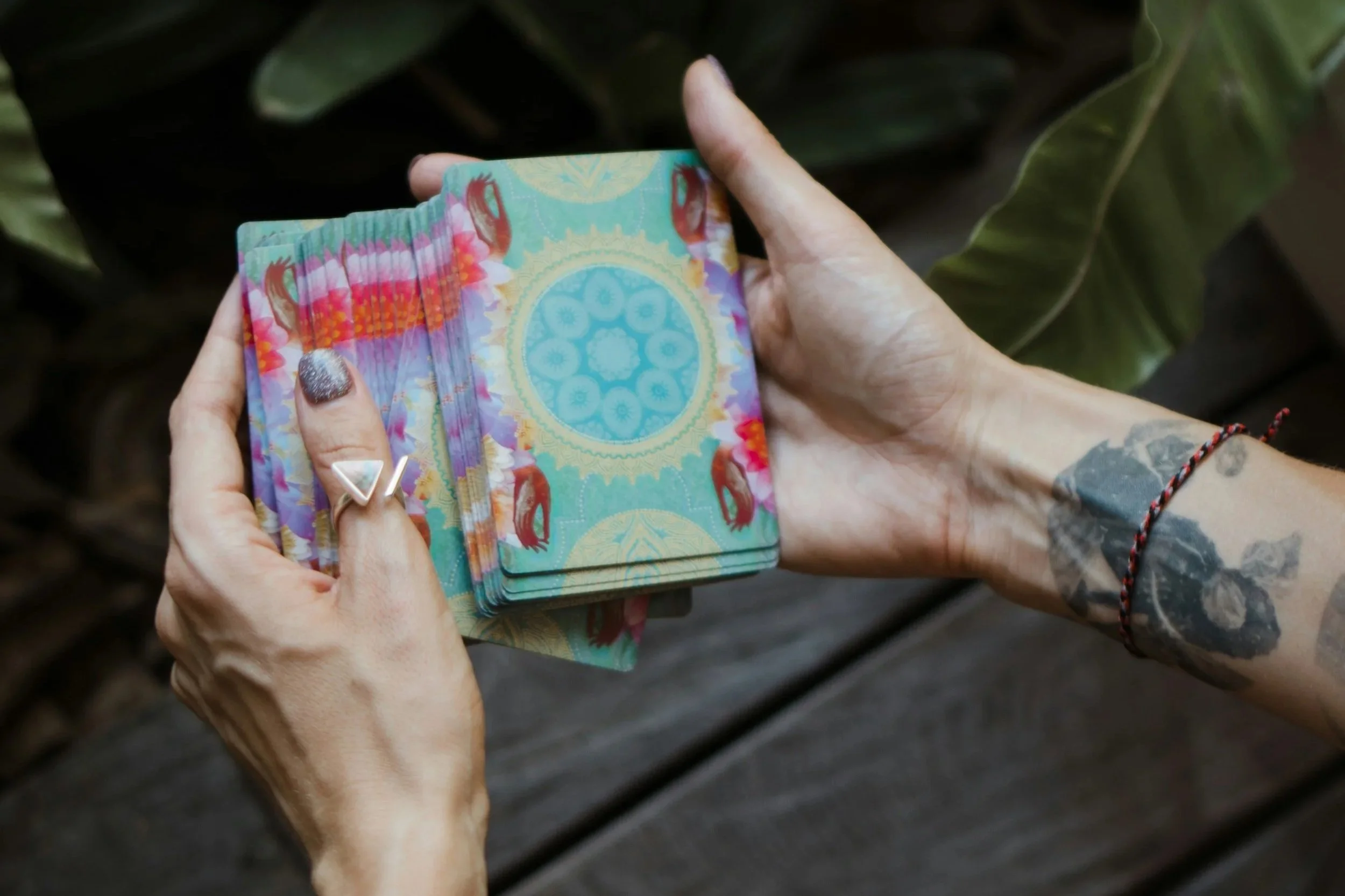
In my practice, spiritually-curious clients sometimes choose to incorporate tarot, ritual, guided imagery, dreamwork, creativity or other symbolic practices into therapy. For others, spirituality remains part of the conversation without involving any specific practice at all.
One thing that’s important to know – these tools aren't used to predict the future or tell you what decisions to make. Instead, they can become ways of accessing intuition, reflection, symbolism and parts of ourselves that aren't always easily reached through conversation alone.
The important piece is that the practice serves the therapeutic work, not the other way around.

5. What about cultural appropriation and spiritual bypassing?
This is an important question, and one that spiritually-integrated therapy should take seriously.
Not every spiritual practice belongs to everyone. Exploring spirituality responsibly means remaining curious about where practices come from, respecting traditions and communities, and recognizing the difference between appreciation and simply adopting sacred practices without understanding their cultural context.
The clients I work with are typically mindful of cultural appropriation and long to craft spiritual practices that are meaningful to their own lineage and cultural traditions. I am happy to support this if requested.
I also think it’s important to talk about spiritual bypassing: using spiritual ideas to avoid difficult emotions or realities. “Everything happens for a reason,” for example, may sound comforting but can become a way of moving too quickly past grief, anger, trauma or injustice.
Good spiritually-integrated therapy shouldn't help us escape our humanity. Ideally, it helps us engage with it more deeply.
That means there is room for spirituality and anger. Ritual and grief. Hope and uncertainty.
6. How is spiritually-integrated therapy different from spiritual coaching or spiritual direction?
The biggest distinction is that spiritually-integrated therapy is still psychotherapy.
As a licensed therapist, my role isn't to serve as a spiritual authority or tell clients what they should believe. Therapy may include spiritual exploration, but it also draws upon clinical understanding of mental health, relationships, nervous-system responses, developmental experiences and patterns that have developed over the course of a person's life.
Spiritual coaches, clergy members and spiritual directors can offer valuable forms of support, but their roles and training are different from those of licensed mental health professionals.
For some people, these forms of support beautifully complement one another.
Making Room for the Sacred in the Therapy Room – Therapy for Women in California
If integrating spirituality into your therapy experience is something you’re craving—or just curious about—I welcome you to book a free consultation here.
I offer spiritually-integrated therapy for women throughout California who are seeking a space where all parts of themselves are welcome: psychological, physical, creative and spiritual.
You can learn more about my approach to spiritually-integrated therapy or reach out to schedule a consultation. I’d be happy to explore whether we might be a good fit.
If you’re interested in reading more about spiritually-integrated therapy and practices, I write more in-depth about this and holistic midlife on substack @ we_were_made_for_this.
Until next time, wishing you health & ease,
Jessika
About Jessika Fruchter LMFT - Specialized Therapy for Midlife Women in California
Jessika Fruchter, LMFT, (Lic. 9767) is based in Oakland California. She offers specialized mental health care for women navigating perimenopause and all things midlife. She offers individual and group therapy support to women throughout the state of California. She also writes frequently about issues of midlife, spirituality and mental health on her blog: Minding Midlife and Substack: We Were Made For This.
My Practice - A Snap Shot
If you are in Oakland or anywhere in California, you may be looking for support that goes beyond symptom management.
My practice focuses on helping women navigate:
Perimenopause and emotional changes
Body image and sexuality
This work integrates feminist psychology, somatic approaches, narrative therapy, and psychospiritual practices to support meaningful and sustainable change.
👉 Learn more about working with me